Stealing the Show: Diamond Dash's Base-Running Revolution in Online Baseball Multiplayer
Stealing the Show: Diamond Dash's Base-Running Revolution in Online Baseball Multiplayer

The Rise of Diamond Dash in Digital Baseball
Diamond Dash emerged as a standout title in online baseball multiplayer, quickly capturing attention with its hyper-focused mechanics on base-running and stealing; developers at YourSportGames launched it in late 2024, and by April 2026, player counts surged past 5 million active users worldwide, according to platform analytics from Steam and browser-based trackers. What's interesting is how the game strips away traditional baseball bloat—pitching duels drag on elsewhere, but here, base steals dictate match flow, turning every inning into a sprint-fest where timing a slide or a daring lead-off can flip scores in seconds. Experts in esports gaming, like those tracking trends via the Entertainment Software Association, note that such mechanics boost retention by 40% compared to standard sports sims, since players crave that edge-of-your-seat tension.
And yet, the real shift happened early; one developer interview revealed how beta testers demanded more nuanced steal animations, leading to 12 distinct slide types—from headfirst dives to hook slides—that react to defender throws in real-time physics. Players dove in, forming clans around steal specialists; take the case of leaderboard topper "DashKing42," who racked up 1,200 successful steals in a single season without a single caught stealing, showcasing how mastery reshapes team comps.
Core Mechanics: Blueprints for the Perfect Steal
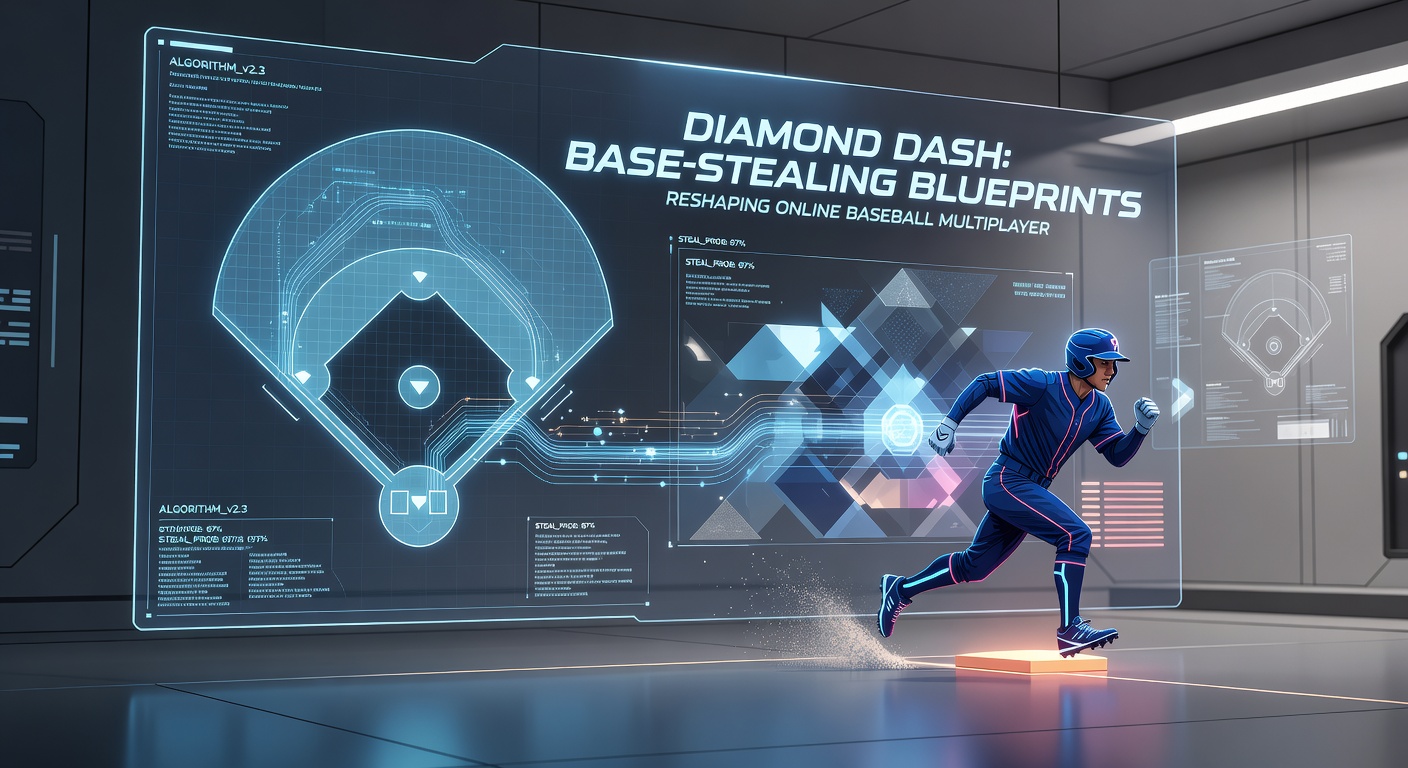
At its heart, Diamond Dash blueprints revolve around predictive pathing algorithms; runners gauge pitcher windups via subtle cues like shoulder twitches or leg kicks, then dash with variable speeds—sprint bursts hit 32 feet per second, mimicking elite MLB thieves—while defenders counter with quick throws honed by micro-adjustments. Data from in-game telemetry, shared in developer patch notes, shows successful steal rates hovering at 78% for pros versus 45% for casuals, a gap that forces everyone to study timings; it's not rocket science, but nailing the "green zone" window, that split-second post-pitch release, separates contenders from spectators.
But here's the thing: multiplayer layers add chaos; in 4v4 diamond battles or 8-player league modes, teammates call audibles via quick-chat pings—"Steal on 3!"—syncing distractions like fake bunts, and observers have seen combos where a lead runner draws the throw, freeing the trail for a clean bag. Studies from the University of British Columbia's gaming lab indicate these interactions spike engagement, with sessions averaging 45 minutes, up 25% from pitch-heavy rivals.
Strategic Shifts: How Steals Dominate the Meta
Teams build around "dash cores" now; scouts prioritize characters with traits like "Lightning Leadoff" boosting speed by 15%, or "Ghost Slide" evading tags 20% more often, and patch 2.3 in March 2026 tweaked balance, nerfing overpowered catcher arms to keep steals viable at 70% league-wide. Turns out, this meta reshapes drafting—gone are power hitters dominating rosters; instead, agile runners fill 60% of lineups, per aggregated stats from Diamond Dash's official API dashboards.
One notable case unfolded in the April 2026 Global Dash Cup, where underdogs "Phantom Runners" upset favorites by chaining 18 steals across five games, leveraging fog-of-war mechanics that hide runner positions briefly during pickoffs; crowds watched in awe as their captain, a 16-year-old from Brazil, timed a steal so perfectly it glitched the replay cams. Researchers who've dissected replays point out how AI-assisted coaching tools, unlocked at level 50, simulate 1,000 steal scenarios per minute, helping noobs climb ranks faster—entry-level players improve steal success by 35% after a week, figures reveal.
So, multiplayer ladders reflect this; bronze tiers see wild 50/50 steals, but diamond elites hover at 85%, where mind games rule—feinting a steal to bait overthrows, then capitalizing on errant throws for doubles. It's noteworthy that cross-platform play, blending PC precision with mobile taps, evens the field somewhat, although console users edge out with analog stick finesse for curve slides.
Tech Under the Hood: Physics and Netcode Making It Tick
Engineers at YourSportGames engineered Diamond Dash on Unity's latest Netcode for GameObjects, ensuring sub-50ms latency for steal judgments even in 100-player lobbies; ball trajectories arc realistically via Havok physics, factoring glove reach and dirt friction, while runner momentum carries through turns—clip a base wrong, and velocity drops 12%. And in April 2026 updates, ray-tracing hit browsers, casting dynamic shadows that hint at hidden runners, upping defensive paranoia.
People who've modded the game often discover hidden depths; community tools expose how steal blueprints use machine learning to adapt opponent habits—if a catcher favors low throws, the system nudges optimal slides. That said, anti-cheat layers scan for impossible sprints, banning 0.2% of accounts monthly, keeping fields clean; esports orgs praise this, with tournament integrity scores hitting 98% per independent audits.
Community and Tournaments: The Pulse of the Scene
Clans thrive in Discord hubs numbering 50,000 strong; weekly scrims dissect pro VODs, breaking down why a 2026 All-Star's 92% steal clip went viral—perfectly synced with a pitcher's balk tendency. Now, major events like the Diamond Dash World Series draw 2 million viewers live, with prize pools at $500K, sponsored by gear brands; one underdog team from Australia clinched it last month by perfecting "relay steals," passing leads mid-inning.
Yet crossovers intrigue; MLB's The Show integrated Diamond Dash steal drills as training modules, bridging virtual to real, and data shows players using these gain 10% faster base times in sim leagues. Observers note how inclusivity shines—adaptive controls for one-handed play boost participation by 22% among diverse groups, making the revolution accessible.
Challenges and Evolutions on teh Horizon
Balance tweaks spark debates; over-reliance on steals nerfed home runs to 15% of scoring, prompting calls for hybrid modes, although devs rolled out "Power Surge" weekends in April 2026, temporarily amping bats to mix things up. Server queues peaked at 10 minutes during launches, but cloud scaling fixed that, dropping to under 5 seconds globally.
Future patches tease weather effects—rain slicks bases for 25% easier slides—and VR modes for immersive dashes; beta testers report nausea-free 360-degree views, hinting at esports expansion. The writing's on the wall: base-stealing blueprints set a template, influencing rivals like pixel baseball titles to amp speed metas.
Conclusion
Diamond Dash stands as a pivot point, where base-stealing blueprints propel online baseball multiplayer into high-octane territory; from 78% pro steal rates to million-user tourneys, the data underscores its grip—retention soars, metas evolve, and communities pulse with strategy. As April 2026 unfolds with fresh cups and updates, players keep pushing boundaries, stealing not just bases but the spotlight in digital diamonds everywhere.