Dynamic Terrains Evolve Through Code in Browser Sports Simulations
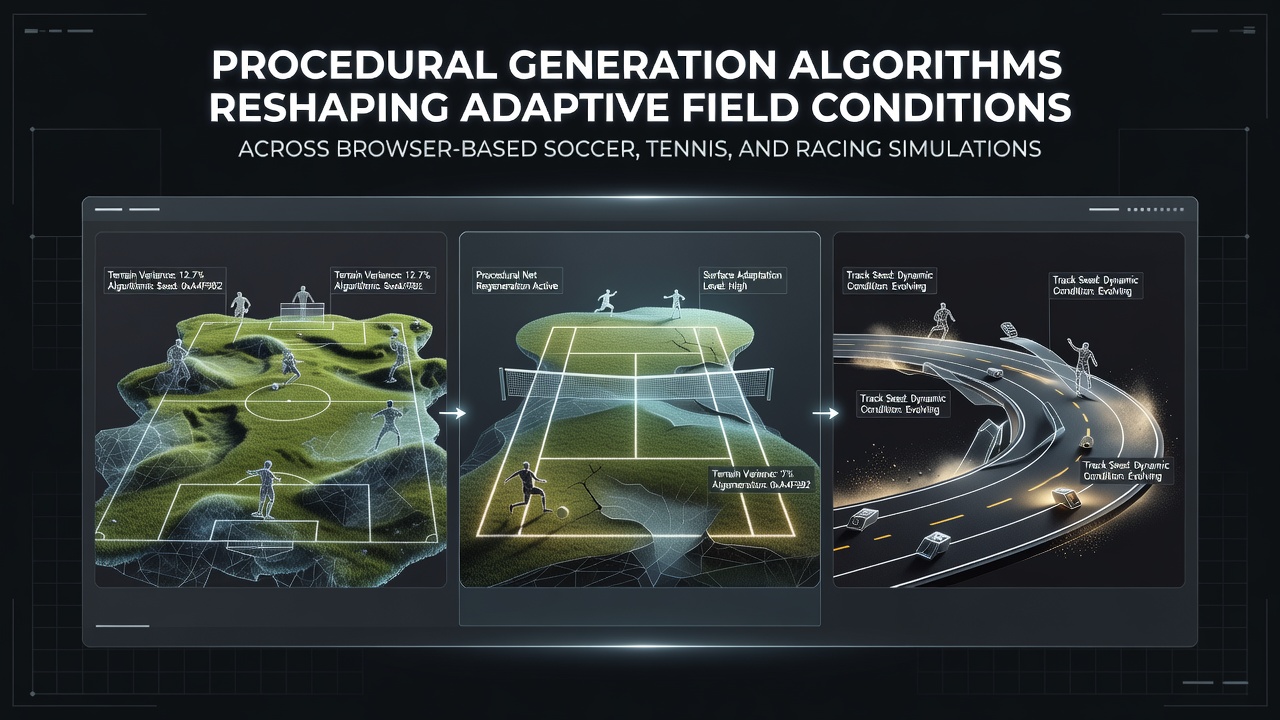
Procedural generation algorithms create and modify virtual environments on the fly, which allows browser-based soccer, tennis, and racing simulations to present field conditions that shift in response to simulated time, player actions, and environmental variables. These systems rely on mathematical rulesets that generate terrain details, surface textures, and weather effects without relying on pre-built assets for every possible state, and developers have integrated them into web platforms that run directly in standard browsers using technologies such as WebGL and JavaScript engines.
Researchers at institutions across North America and Europe have documented how these algorithms calculate variables like grass wear patterns in soccer simulations or rubber degradation on tennis courts, and the same frameworks extend to racing tracks where asphalt temperature and moisture levels alter grip coefficients in real time. Data released in July 2026 by the Interactive Software Federation of Europe showed increased adoption rates of procedural systems in multiplayer browser titles, with participation numbers rising as sessions adapted to user inputs across distributed servers.
Core Mechanisms Behind Adaptive Conditions
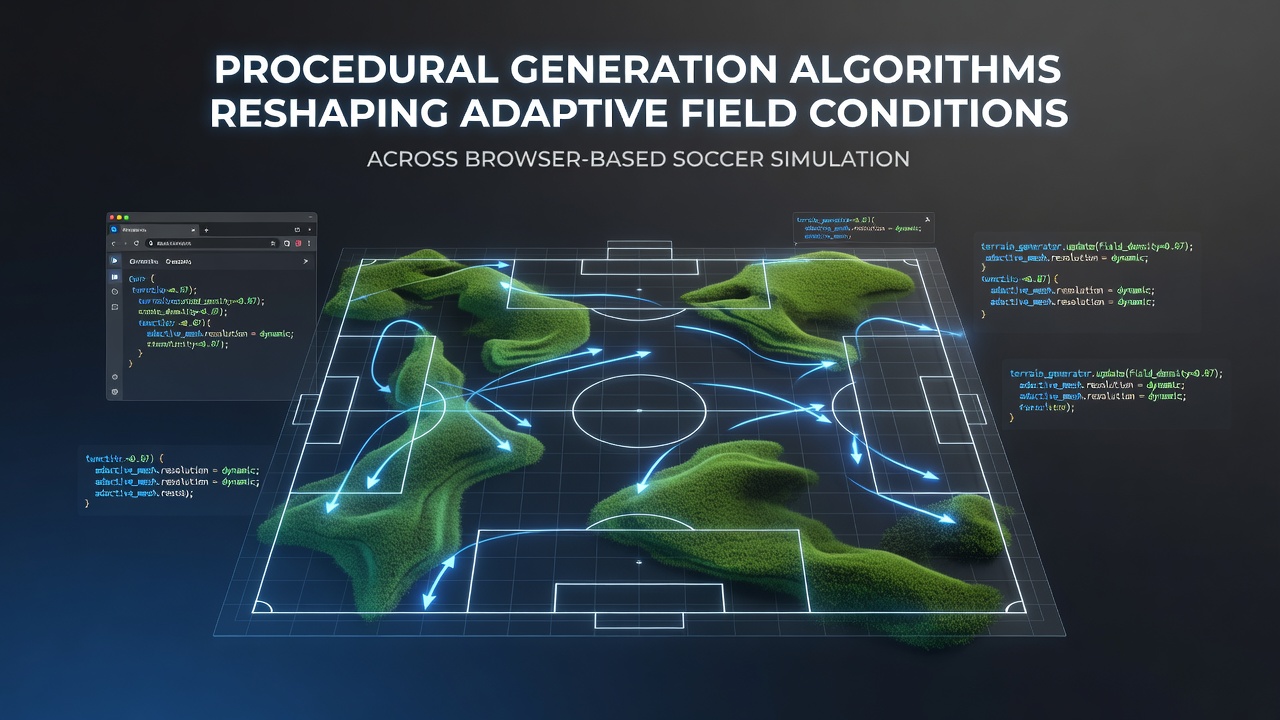
At the foundation of these simulations sit noise functions and cellular automata that produce organic variations in ground surfaces, while rule-based decision trees determine how those surfaces respond to repeated interactions such as ball bounces or tire friction. Soccer environments use height-map generators that erode virtual pitch areas based on foot traffic density, whereas tennis courts apply texture blending routines that simulate clay or grass degradation after each rally sequence. Racing titles layer additional modules for temperature gradients and wind vectors that feed directly into vehicle physics calculations, creating feedback loops where earlier laps influence later track states.
Engineers combine Perlin and Simplex noise variants with custom shaders to maintain performance within browser memory limits, and observers note that these choices keep frame rates stable even when multiple players interact with the same evolving field. The result appears in synchronized sessions where one participant's aggressive play style accelerates surface changes visible to everyone connected through the shared instance.
Implementation Across Soccer, Tennis, and Racing
Soccer simulations apply procedural erosion models that track ball drag and player sliding, which gradually creates divots and bald patches that affect passing accuracy and shot trajectories. Tennis platforms extend similar logic to court lines and net tension, with algorithms adjusting bounce angles according to accumulated wear data collected during matches. Racing environments focus on track surface composition, where procedural layering of dust, oil, and water creates localized grip changes that demand constant adjustments from competing drivers.
Cross-genre titles have begun sharing core procedural libraries, which allows a single weather system to influence both a tennis match and a concurrent racing event hosted on the same backend cluster. Figures from academic reports at the University of Melbourne indicate that such shared modules reduce development time while increasing the range of possible condition combinations presented to players during extended sessions.
Performance Considerations in Browser Environments
Browser constraints require procedural routines to execute efficiently on client hardware without dedicated graphics cards, so developers prioritize lightweight algorithms that generate only visible portions of fields at any given moment. Level-of-detail systems cull distant terrain modifications, and delta compression transmits only changed surface parameters between server and clients. These optimizations have enabled stable multiplayer experiences even when hundreds of concurrent users interact with the same adaptive environment, according to industry benchmarks published by the Entertainment Software Association in early 2026.
Network latency handling integrates directly with procedural updates, because delayed packets can desynchronize surface states across participants, and compensation techniques interpolate missing data using the same generation rules that created the original conditions.
Future Directions and Integration Trends
Continued refinement of machine learning overlays on top of procedural bases appears in several active development pipelines, where historical match data trains models that predict likely condition shifts before they occur. This approach allows simulations to pre-generate probable surface states, which reduces on-demand computation spikes during peak usage periods. Geographic diversity in source data, drawn from both European and Asian player bases, helps calibrate algorithms for different regional play styles and connection qualities.
Integration with emerging web standards continues to expand the range of effects that can render without plugins, and testing programs scheduled through late 2026 aim to measure how these enhancements affect session duration and user retention across the three simulation categories.
Conclusion
Procedural generation algorithms have established themselves as core components in browser-based soccer, tennis, and racing simulations by enabling field conditions that respond dynamically to ongoing play. Their implementation relies on efficient mathematical models that respect web platform limitations while delivering varied experiences across distributed user groups. Ongoing research and shared development resources point toward further convergence of these systems, with measurable impacts on gameplay variety documented through industry and academic channels as of July 2026.