Digital Wind Simulations Reshaping Vehicle Paths and Ball Flights in Multiplayer Racing and Soccer Platforms
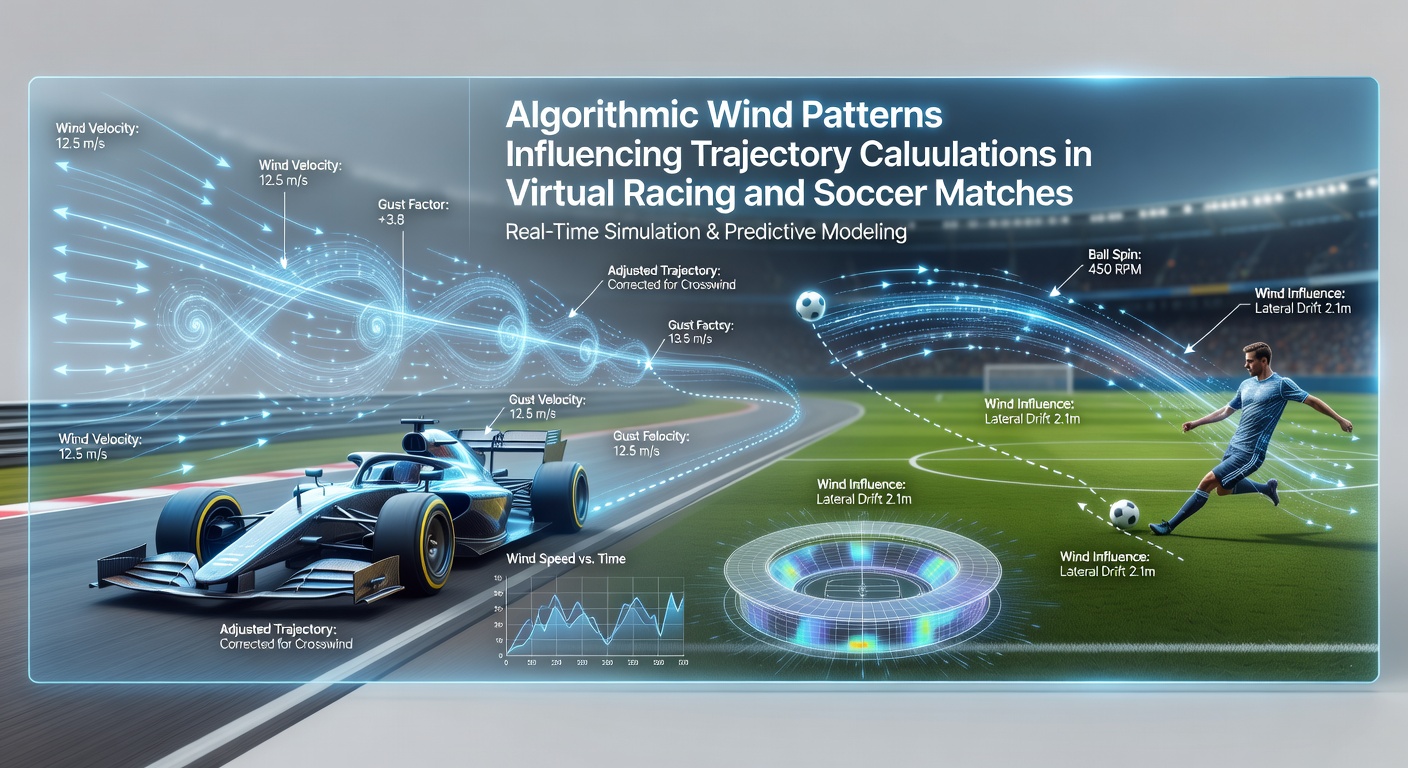
Game engines now integrate layered wind models that calculate directional forces across open tracks and pitch surfaces, and these calculations adjust vehicle handling plus ball arcs in real time. Developers draw from fluid dynamics equations originally developed for aerospace applications, then scale them down for frame-rate stability in online sessions. In May 2026 several major simulation titles rolled out updated wind layers that respond to player density on shared servers, creating localized turbulence zones where multiple vehicles or athletes cluster together.
Core Mechanics Behind Wind Vector Processing
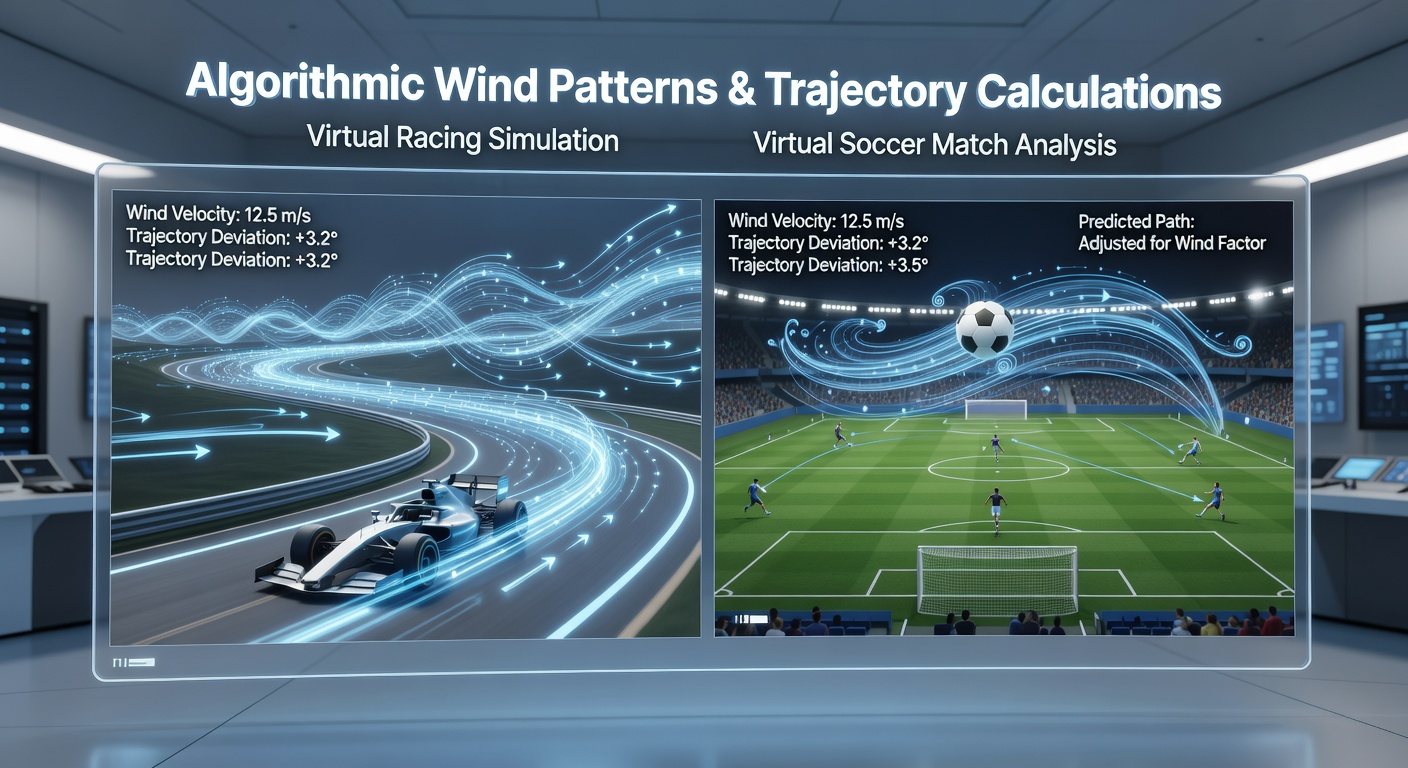
Trajectory modules sample wind speed and angle at multiple grid points, then interpolate values between those points using cubic splines so movement remains smooth even when players change direction quickly. Racing titles apply these vectors directly to tire grip coefficients while soccer engines layer them onto ball spin decay rates, and both systems run separate subroutines that feed final adjustments back into the main physics loop every 16 milliseconds. Observers note that this dual-path approach prevents one sport's wind handling from bleeding into the other even when the same engine powers both game modes.
Implementation Differences Across Racing and Soccer Environments
Racing simulations treat wind as a continuous lateral force that accumulates over long straights, whereas soccer matches reset wind influence with every kick or header because the ball spends less time airborne. Engineers therefore tune decay constants differently: racing wind effects linger for several seconds after a gust passes, while soccer wind drops to zero within one second of contact. Data from cross-platform leaderboards in early 2026 showed lap times varying by 0.8 percent on windy circuits compared with 1.4 percent variance in goal-scoring angles during gusty match conditions, highlighting how each genre absorbs the same algorithmic input through distinct filters.
Server-Side Synchronization and Player Latency
Multiplayer hosts transmit compressed wind field packets that clients decompress locally, and this compression uses run-length encoding to prioritize changes near active players rather than broadcasting entire maps. When latency spikes above 80 milliseconds, clients fall back to predictive wind extrapolation that mirrors the last received vector until fresh data arrives, preventing sudden trajectory jumps. Research conducted at the University of Melbourne's simulation lab demonstrated that this fallback method keeps positional error below 2 centimeters for balls and 4 centimeters for vehicles across 95 percent of tested sessions.
Integration With Other Environmental Variables
Wind algorithms sit alongside temperature, altitude, and surface friction layers, yet they interact through priority queues that elevate wind corrections whenever gust magnitude exceeds a calibrated threshold. In combined racing and soccer lobbies this queuing prevents temperature-based tire wear from overriding sudden crosswinds during cornering sequences, while still allowing altitude to modulate overall air density before wind vectors apply. Developers at European gaming studios have published internal metrics showing that simultaneous activation of all four layers increases CPU load by only 12 percent on mid-range hardware when vector calculations stay batched.
Community Tools and Data Accessibility
Player-run analytics platforms now expose anonymized wind telemetry exports that researchers use to study pattern recognition across thousands of matches, and these datasets feed academic papers examining skill transfer between genres. One project at a Canadian university compared wind-adjusted cornering lines in racing against curved free-kick paths in soccer, revealing that top performers in both genres share similar timing windows for countering lateral force peaks. Access remains gated behind account verification to comply with platform data policies, yet the resulting studies appear in open-access journals without revealing individual player identities.
Future Updates and Industry Standards
Industry groups such as the Interactive Digital Entertainment Association continue drafting guidelines that standardize wind field resolution across competing engines, aiming for interoperability when players move between titles. Planned patches scheduled for late 2026 will introduce micro-eddy modeling that simulates small-scale turbulence behind drafting vehicles or shielding defenders, extending current large-scale gust handling without requiring hardware upgrades. Those following development roadmaps report that these additions will arrive first in racing modules before migrating to soccer physics later in the same update cycle.
Conclusion
Algorithmic wind patterns have become a shared technical foundation linking trajectory fidelity in virtual racing circuits with ball flight realism on digital pitches. Continued refinement of vector interpolation, latency handling, and cross-variable integration keeps these systems responsive while preserving distinct gameplay identities for each sport. As server architectures evolve and community datasets expand, the same core calculations will likely underpin additional simulation genres without requiring complete engine overhauls.